
Peak Oil is You

Donate Bitcoins ;-) or Paypal :-)


Page added on March 8, 2011

Peak Oil and the New Boom-Bust Cycle
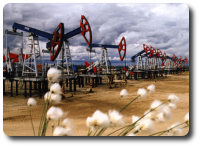
Was the near-financial-collapse of 2008 the first crisis of many?
Tight oil production and growing oil demand have caused oil prices to rise during the past decade. During late 2008, we also saw what happens to the economy when oil prices pass a threshold beyond which the economy cannot operate: Demand is destroyed, economic growth slows, leveraged entities fall and monetary policy forces are unleashed.
Despite what many believe, peak oil won’t create a Mad Max scenario with outlaw biker vigilantes roaming the roads. (At least not in the intermediate future.) Instead, peak oil will simply stealthily and persistently chip away at the edges of our financial system and living standards. Occasionally there will be flareups – we’ll give these names like ‘subprime crisis’ and ‘sovereign debt crisis’. But what’s really happening is that high oil prices are eroding the weakest links in the global economic system.
During the 20th century, cheap energy acted as the lubricant for the global economic orgy. A subsidy from God, one might say, cheap oil enabled the average person to eat well, travel well and live well. One might argue that cheap energy provided the dividends that enabled the rise of the middle class and the welfare state. So what happens when you gradually take that subsidy away?
As oil prices rise, discretionary incomes get squeezed. As the energy subsidy first starts to recede, high energy costs are directly reflected in higher gas prices, and individuals and businesses most reliant on transportation fuels cut back on spending. Even when this is the only effect of high oil prices and the initial impact to economic activity appears small, as we learned from the 2008 collapse, it is enough to topple highly leveraged entities, whether they are hedge funds, banks or Joe Smith.
Eventually, defaults creep through the economic system putting many financial intermediaries at risk. Participants occasionally become paralyzed by fear and distrust, pushing the entire economy to the brink of collapse, like what we witnessed in 2008/2009.
Enter the central banks
The central banks – either directly or using the Treasury as an intermediary – pump liquidity into the financial system and buy bad debts from the private sector (or public sector, for that matter). This effectively transfers the bad debt to the taxpayer by virtue of accountability and currency debasement. In addition, fiscal stimulus (which is often cloaked monetary stimulus) adds additional public sector debt in the name of stimulating growth. In whole, debt burdens rise. Of course, all this is done under the assumption that the economy will somehow be able to repay these new debts through future growth.
Return to growth – Exacerbating the Cycle
Let’s assume that some sort of growth returns after the economy is stimulated. If growth returns, tax receipts will rise and governments can start to repay debts. However, growth will also increase demand for oil, putting pressure on production and sending prices up towards another threshold that once again breaks the weakest links of the economy.
That threshold could be the same, higher or lower than the previous threshold, depending on the fragility of the recovery. Also, the level of economic activity required to push oil prices beyond the next threshold may not be the same as before – this is especially true if exogenous variables (e.g. emerging markets demand) and dollar-debasement are driving up oil prices, even as endogenous economic growth remains lacklustre. Production declines would also increase prices independent of demand growth.
Bottom line is that at some point the oil-price-to-economic-activity ratio will get to a point that sets off another oil-induced decline in economic activity, and the default-bailout-growth cycle repeats.
Right now, oil prices are most noticeable when we fill up our gas tanks. But as high oil prices become pervasive throughout the economy (remember that cheap oil has provided the world an energy subsidy by its use in transportation, plastics, agriculture, chemicals) the breadth and depth of aggregate wealth creation will suffer. This will increase the number of weak links throughout the economy. It will also increase the sensitivity of the weak links.
Consequently, as the default-bailout-growth cycle repeats and rising oil prices become more omnipresent, periods of economic growth become weaker, periods of economic bust more frequent and persistent. Eventually, as the cycle repeats, the sharp economic contrasts of boom and bust blend together becoming a permanent shade of economic grey.
In a world of economic grey, defaults become more frequent, bailouts to support financial infrastructure and the growing mass of unemployed cause monetary growth to spiral out of control and economic ‘successes’ are characterized as periodic episodes of stabilization.
Assuming current policies persist, and until we find an alternative economic subsidy to inexpensive oil, over the long-run this cycle would turn into a hyperinflationary depression, as central banks print, the economy shrinks and the masses suffer.
The reversal of the cheap energy dividend would spell the end to middle class society, as the limited number of ‘haves’ hoard their wealth, food and weapons. What little wealth and property the middle class controls would be sequestered by the elite as the middle class citizens lose their jobs and default on their debts. Eventually the middle class become serfs living a life of subsistence, providing the labor to toil on the land they once owned – a less punitive alternative to debtors’ prison.
Those that are able to escape the drudgery of indentured servitude will be the middle class citizens who default while the system still works in their favor or who have nothing to default on. Unfortunately, the defaulting unemployed also cannot pay rent so to avoid the unfortunate trade-off between serfdom and homelessness one must own land that isn’t mortgaged or own enough assets to buy a home or pay rent indefinitely. In other words, to survive or thrive in this grey economic future one must either reduce their dependence on income or have a large enough asset base to generate cash flow.
One Comment on "Peak Oil and the New Boom-Bust Cycle"
Lampert Scratch on Wed, 9th Mar 2011 1:06 pm
…or join a hoard of outlaw biker vigilantes!