
Peak Oil is You

Donate Bitcoins ;-) or Paypal :-)


Page added on January 28, 2011

A New Look At Peak Oil’s Impact: Everyday Toiletries
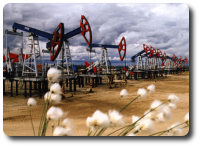
So let’s take a look at another of post-peak oil’s impacts … a much more mundane example inside the home. (I promise that before too long there will be some logical continuity to all of this. For now, I think it’s important to just a sampling of how Peak Oil is going to cut across a wide swath of behaviors and needs and preferences.)
I’ll assume that my wife’s (and my) customary morning routines before work are not all that dissimilar from how most of you conduct yourselves at home as you prepare for your day.
That being the case, I’ll also assume that I’m not going too far out on a limb by suggesting that some or all of these bathroom items are familiar to each of you:
Toothbrushes
Toothpaste Tubes
Shaving cream
Shower Curtains / Shower Doors
Shampoo
Hair coloring
Hand Lotion
Deodorant
Combs
Perfume
Soft Contact Lenses
Lipstick
Nail polish
All, of course, are products whose design and/or manufacture and/or marketing and/or packaging and/or delivery to retail outlets for your ultimate consumption or use depend at least to some extent on petroleum. No petroleum, and some if not all of these products become more challenging to produce and distribute. But that’s a problem for the corporate world. How about for each of us?
I’m pretty sure that civilizations past, even those in the fairly recent past, have managed just fine without today’s bazillion varieties of toothbrushes and toothpastes, but we do have our preferences, after all. Millions of workers depend on our finicky preferences for this formula gel or that formula color to make us feel good. It’s also extremely convenient to just hop into the car and head to the local convenience or grocery or department store (or gas station!) and pick up a spare toothbrush or pocket comb or deodorant moments after we toss away an empty tube or container or bottle of our favorite bathroom items. A few dollars later and we’re on our way!
But when happens when product manufacturers are obliged of necessity to start making do with less of the “ingredients” they need? What changes will be required? How quickly can the health and beauty industry adapt to the elimination of a key component in producing many of our basic necessities? What costs might be involved? What happens to suppliers along the chain? To the transportation services who may now have fewer products to deliver? What kind of plans and processes will have to be revised—if not created anew—in order to maintain their same levels of production and supply in a world where no one and no company and no industry can rely on the same qualities and quantities (and at feasible costs) of petroleum-based products?
What about us? What happens when the 40 different brands of shaving cream we can count on in Aisle 4 at Walmart are whittled down to perhaps 15? 10? 5? How will we feel about having to now pay two or even three times the price of those once-plentiful and varied products, given that the domino effect of less supply will surely play a part in the health and beauty industry’s price increases no less than any other commercial or industrial enterprise dealing with supply and demand issues. What happens if entire lines of shaving cream or shampoos or nail polishes are discontinued because costs become prohibitively expensive and/or availability of petroleum is either rationed or simply diminishes, and the expenses associated with maintaining all the workers and machinery and distribution chains for certain products can no longer be justified?
No one will die if they have to suddenly rely upon some different type of product to shave their face or legs! Millions worldwide manage quite nicely, thank you very much. But creature comforts for we spoiled Americans are one of many indicators of the good life we usually take for granted, and that is all going to change long before we’ve put into place all of the needed alternative energy supply and production and distribution processes.
Like those millions of others, life will continue without our Brand X Spearmint Shave Gel With Whisker Softeners and Skin Regenerators in both the 16 and 32 ounce easy-press cans. Will we be so cavalier about this when combs and brushes likewise disappear from the shelves? And then half the brands of toothpaste gradually disappear as well? A favorite line of body lotion? Replacement shower curtains for the one your teenager ripped last night? And what of your soft contact lenses—the only ones that you can wear comfortably all day? Or your wife’s vanilla- and chamomile-scented perfume that lingers long after she’s left the house, the one that is now nowhere to be found? How about when your choice of deodorant is now down to just a handful, costs a lot more than you ever imagined, and is available only at a couple of locations in your area? None of those considerations are especially outlandish. It’s not much more than basic economics.
What about your brother-in-law the chemist? The one who has worked in the industry for nearly twenty years to help design our favorite fruit-scented hair sprays and now finds himself among the countless product designers and industrial artists and copywriters and machine operators and truck drivers and distributors and the employees of the companies that supply the lipstick containers and toothpaste tubes who are now all out of work because over the course of a number of years, the fossil fuel that each of their companies depended upon in some way, shape, or form (and likely without so much as a thought about that) is now being diverted to other uses and other industries?
How distressing might we find all of this in the years to come? We’re not exactly the poster children for doing without.
How much effort and financing and creativity are any of us devoting right now to preparing for that eventuality? Are we and the relevant industries just hoping for the best? Ignoring this issue entirely? Waiting for some magic design to materialize from someone’s basement? Should they, and we, just go on assuming that despite the facts of stagnating oil production and ever-rising prices (surely signaling that something is amiss), the supply of petroleum-derived products and ingredients and services will continue unceasingly and always affordably?
To be sure, I don’t expect any of us to suffer great trauma any time soon because we’re losing our favorite flavored toothpastes, but the process of designing and producing and advertising and testing and distributing and continuing to manufacture those products are all and each the end results of much labor and innovation over considerable periods of time. Entire industries and their countless employees and accountants and lawyers and all the rest are dependent on the continuing success of the health and beauty industry giants and their legions of chemists and machine workers and drivers and administrative personnel and marketing departments.
What happens when they are no longer giants and no successors have emerged?
How disquieting will it be for each of us to find ourselves having to adapt to entirely different ways of maintaining personal hygiene? Probably a bit (or a lot) silly to have to consider this right now. I’m fairly certain that each and every one of us not employed in the health and beauty industry have given this exactly no thought at all. Shampoo is shampoo, right? “I’m worried about feeding my kids and you’re wondering if I can manage without my favorite toothpaste? Seriously?”
Actually, yes. It does not begin and end with toothpaste, or lotion, or lipstick….
How many resources of any kind are being devoted to contending with this type of supply “problem”? (a term I admittedly use loosely at the moment. I won’t suddenly stop brushing my teeth because my blue gel toothpaste becomes a casualty of Peak Oil, nor will there be any hunger strikes on my part.)
The more important question is how many resources are being devoted in all kinds of industries who will themselves be confronted with the same kinds of challenges as those health and beauty industry corporations? There a lot of dominoes in play when the declining fossil fuel one tips over first. Changes in our morning bathroom routines should be our biggest concern in the years to come.
5 Comments on "A New Look At Peak Oil’s Impact: Everyday Toiletries"
Kenz300 on Sat, 29th Jan 2011 12:28 am
Limited resources and an expanding population…. something has to give.
richard on Sat, 29th Jan 2011 2:44 am
It will reduce what I consider a confusing assortment of products that are currently present. I welcome the reduction, just like it was as I grw up.
Rick on Sat, 29th Jan 2011 4:00 am
Peak oil does matter. Though, keeping warm, and having access to clean water, and food will be job one.
I have to say, most people I know, and I know a lot, have never heard of Peak oil. These folks will not do well, going forward.
James on Sat, 29th Jan 2011 7:27 am
I was born in 1950 and when I came of age where I was aware of things around me. I only knew of 2-3 brands of tooth paste and they were of one flavor. Shaving soap that my grandfathers and father used was a cake type in a mug. Razors were metal and meant to last a few years with just the blade to be changed. Deodorant was none existent or just one of 3 or 4 brands that you rolled on or rubbed on. Hair products were made from animal products or Vaseline. Toothbrushes were made out of wood or Bakelite, and they were all made the same. To summarize, there were only a few of each type of health or toiletry items to be had and they seem to work just fine. Showers were not to be found in many homes but tubs were the main thing to get cleaned in. So, shower curtains or doors were few and far between. Most things that were replaced with plastics were made of wood, metal, or Bakelite, all none petroleum products. Most things were made of natural things that were renewable and environmentally friendly or inert. As for the folks who work to bring us all of these items. They can still work figuring out how to improve our soils for food production, figuring out how to clean up our environment of pollution, Etc. There will be plenty of work for chemists and other technically inclined people. Just in different areas of focus. Yes, we need to get our priorities straight and focus on making things that are really important to our health and survival. Medicines, food, NECESSARY health products, and other things we really need. Think pre-1950s for an idea for what we should be aiming for.
DC on Sat, 29th Jan 2011 10:26 am
Virtually every “product” on that list, are produced by chemical companies whoes products are in every single case, loaded with toxic compounds. And of course, they are sold in plastic, toxic containers(more oil) Most of these items are completly un-necessary and on top of that, are also, fairly expensive. Make your own toothpaste, household cleaners etc. You will save lots of money and have a healthier body and home.
For a documentary on this very topic see
http://www.chemicalnation.com/content/
Its informative and funny