
Peak Oil is You

Donate Bitcoins ;-) or Paypal :-)


Page added on November 12, 2010

Peak Oil Finally Piquing Analysts?
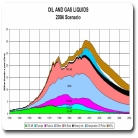
According to a new report: We need to put a carbon price on oil to keep the price of oil down.
You know how the climate-denier politicians love to warn the public that any climate legislation will increase energy costs and destroy our economy? A recent report pokes some holes in that reasoning. The authors of the report? None other than the International Energy Agency or IEA.
The IEA is an intergovernmental organization originally set up to provide energy analysis to its 28 member governments in the wake of the 1973-74 oil crisis. One of its main tasks is to produce an annual report on the state of global energy — it’s called the World Energy Outlook. If you’re an energy wonk, and who isn’t these days, it’s pretty heady stuff, filled with cool facts and figures about what has happened and predictions based on economic and energy models about what is likely to happen.
The IEA has always been focused on fossil fuels. Two of its founding objectives were to:
- “maintain and improve systems for coping with oil supply disruptions,” and
- “operate a permanent information system on the international oil market.”
And even though its mandate included “improv[ing] the world’s energy supply and demand structure by developing alternative energy sources and increasing the efficiency of energy use,” the IEA’s reports tended to focus on fossil fuels while largely marginalizing the role of renewable energy. But that has changed.
IEA Jumps on the ‘Peak Oil’ Wagon in 2008
IEA’s about-face began two years ago when, in a departure from its typically confident projections for petroleum supply, the organization reported that fields were declining at double the rate of earlier projections and projected that conventional oil would peak in 2030. Previously, the idea that oil supplies might one day peak had been “dismissed,” to quote one reporter referring to IEA’s 2005 report. The IEA’s executive director even went on record referring to those concerned about peak oil as “doomsayers.” Not so anymore … especially for petroleum — the scarcest of fossil fuels. By some reports it took a whistle-blower at the IEA to get the agency to fess up about impending oil shortages. But that was a couple of years ago. Flash forward to 2010.
IEA Bids Farewell to Cheap Oil This Year
IEA’s three-volume, 700-plus-page outlook for 2010 is hot off the presses, and one of its major conclusions [pdf], once again, is that the age of cheap oil is behind us. It’s a perfect storm headed our way — a steady rise in global demand for oil crashing up against an increasingly limited supply of economically recoverable oil. By 2035, the group projects, demand for oil will increase from about 84 million [xls] to 107 million barrels per day, and prices will rise to $135 per barrel — a range we painfully visited briefly during the spring and early summer of 2008. (The current price of oil is about $80 a barrel.)
But There Is a Potential, if Surprising, Fix
That’s definitely going to put a sizable dent in our wallets and end up sending a lot of dollars to foreign shores. But the IEA points out that there is one way to get off the oil-price roller coaster. If we enacted policies to reduce greenhouse gas emissions (and promote renewable energy), demand could be as much as 10 percent less, a prospect that would in turn reduce each barrel of oil by about $20 in 2035.
The bottom line is that alternatives to fossil fuels are needed to rein in their prices and ease supply constraints while they are a dominant player on the world stage, and economists tell us that the most effective way to get there is to put a price on carbon.
It’s kind of odd, but it could turn out that the best way for us to save money in the long run is to put a price on carbon and thus discourage people from consuming so much gasoline and driving the price up.
Now, I realize that this might upset the anti-cappers and anti-carbon taxers, but, hey, don’t blame me — I’m just the messenger.
5 Comments on "Peak Oil Finally Piquing Analysts?"
KenZ300 on Sat, 13th Nov 2010 1:30 am
Our economic security and national security demand that we transition to alternative energy.
It is time to end the oil monopoly on transportation fuels.
Fueling stations need to sell gas, ethanol, diesel, biodiesel, CNG, electric charging stations and battery swap out.
When the price of oil was $147 / barrel in 2008 we had a wake up call. As prices dropped due to the great recession we quickly forgot the pain of high oil prices.
We need to support the transition to clean, sustainable alternative energy.
Wind, solar, geothermal and biofuels all need public and government support. The world economy was built on cheap energy.
We need to transition to alternative energy before the high price of oil causes major economic damage to the world economy.
davep on Sat, 13th Nov 2010 1:33 am
Ethanol is 10% of the blend of gasoline in the US. That is 10% less oil being used.
What would the demand for oil and the price be if ethanol was not part of the mix?
By davep, not Ken. Why did the original post show up as being by Ken? I have since edited the author name.
James on Sat, 13th Nov 2010 10:44 am
We need to come to the realization that any alternative energy development is going to have the oil component taken out of its equation. Most of the “alternative energy” development have an oil component in them. Examples include alcohol from grains and plant materials. These require fertilizers ( a natural gas derivative), gasoline/diesel fuel (oil derivative), Insecticides and herbicides (petroleum derivative), and farm equipment which depend on the extraction of metal which are in short supply now. Also, you need oil to make tractor tires, oil (diesel or gasoline) to run them to plant the crops, spray chemicals, and harvest the crops. And lastly, we would need oil to transport the crops to local markets which are usually not so local (1500 to 2000 miles away). Our politicians are reversing railroad projects laws as fast as they become law, citing that the trains are too slow and cumbersome, that passengers won’t use them. As the price of gasoline and transportation goes up, I think the public will change its mind really quick as the prices go up.
James on Sat, 13th Nov 2010 10:50 am
Also, the production of alternative fuels from agriculture products will require that the soils used to grow them in, will require fertilizers or the soils will become depleted. Most soils on farms today, rely on fertilizers to keep the crop production up. All soils will become depleted over time and without fertilizers or something to replace the plant nutrients you can forget alternative energy derived from plant materials.
KenZ300 on Sun, 14th Nov 2010 2:14 am
If every trash dump used the materials delivered daily for inputs to a second generation ethanol plant we could go a long way toward providing alternative energy for our economy.