
Peak Oil is You

Donate Bitcoins ;-) or Paypal :-)


Page added on September 7, 2010

Coal and Oil: The Dark Monarchs of Global Energy
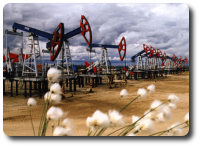
The formation of modern society has been dominated by coal and oil, and together these two fossil fuels account for nearly two thirds of all primary energy used by mankind. This makes future production a key question for future social development and this thesis attempts to answer whether it is possible to rely on an assumption of ever increasing production of coal and oil. Both coal and oil are finite resources, created over long time scales by geological processes. It is thus impossible to extract more fossil fuels than geologically available. In other words, there are limits to growth imposed by nature.
The concept of depletion and exhaustion of recoverable resources is a fundamental question for the future extraction of coal and oil. Historical experience shows that peaking is a well established phenomenon in production of various natural resources. Coal and oil are no exceptions, and historical data shows that easily exploitable resources are exhausted while more challenging deposits are left for the future.
For oil, depletion can also be tied directly to the physical laws governing fluid flows in reservoirs. Understanding and predicting behaviour of individual fields, in particularly giant fields, are essential for understanding future production. Based on comprehensive databases with reserve and production data for hundreds of oilfields, typical patterns were found. Alternatively, depletion can manifest itself indirectly through various mechanisms. This has been studied for coal.
Over 60% of the global crude oil production is derived from only around 330 giant oilfields, where many of them are becoming increasingly mature. The annual decline in existing oil production has been determined to be around 6% and it is unrealistic that this will be offset by new field developments, additional discoveries or unconventional oil. This implies that the peak of the oil age is here.
Leave a Reply