
Peak Oil is You

Donate Bitcoins ;-) or Paypal :-)


Page added on August 1, 2010

Cobb: Pontificators Should Prepare Before They Preach
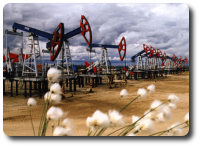
What will it take to convince people about the dangers of peak oil?
As I watched the compelling interview of Michael Ruppert which was made into the movie Collapse, I found myself identifying with Ruppert’s frustration that the public does not seem to understand the problem of peak oil and that it’s hard to figure out what will convince it that peak oil is a serious problem.
I contrasted Ruppert’s use of everyday analogies to illustrate the problem with the fact-and-figure laden presentations I’ve seen from Matt Simmons over the years and Simmons’ book, Twilight in the Desert, a challenging tome of technical information that lifted the veil on Saudi Arabia’s oil reserves. Each approach seeks out different audiences. Ruppert talked to a general audience through his now defunct newsletter. Simmons was typically addressing well-informed specialist audiences that were capable of following his technical explanations.
I applaud and have benefitted from the efforts of both to bring the realities of peak oil to a larger audience. It occasionally concerned me, however, that the two would engage in prognostications that time would likely debunk primarily because they put a near-term emphasis on them. At the time he was interviewed for Collapse Ruppert believed that the recent economic crash was the beginning of the unraveling of industrial civilization. Since then a partial revival, especially in Asia, has made that view seem at best premature. He may turn out to be right in the long run. But not today!
Simmons has been lecturing about the decrepit state of the oil and natural gas infrastructure. When I saw him at a conference in 2008, he was concerned that an oil crisis would quickly lead drivers to top off their tanks and draw down the levels of petroleum products in pipelines and other oil infrastructure below what he called the “minimum operating level.” (PDF) Such a drawdown would, in his view, cripple the entire system and halt transportation of food and other critical commodities. Though he didn’t exactly predict that such an event was imminent, he was clearly very concerned that it could happen at any time. As of this writing, it hasn’t happened. That doesn’t mean that it won’t. Just not today!
Unfortunately, such failed predictions provide fodder to those who tell the public that erroneous predictions somehow invalidate the concept of peak oil as well as the writings and presentations of those who make such predictions. I myself have been too much obsessed with a possible natural gas cliff in North America. I had the good sense to use a question mark in the title of the piece cited. But I’m not sure that’s much of a defense.
My professional experience is in the area of mass communications. Naturally, when I think about important public issues, I think about how to communicate about them to a broad public. Lately, however, I’ve been pondering a piece of advice Richard Heinberg often gives in his lectures. He tells his audiences that like an airplane passenger in a depressurization emergency who is instructed to put on his or her own oxygen mask before assisting others, those in the peak oil movement need to make their own peak oil preparations before assisting others. Partly this is a practical consideration. How can one be effective in assisting in the energy transition if one’s own finances, livelihood, and basic needs such as housing, food and transportation are not reasonably robust?
But there is another important aspect to one’s own preparation. Last week I was traveling in Canada and had a long conversation concerning peak oil with a couple staying at a bed and breakfast. Once they found out that I write frequently on the topic, they were interested in what I had to say. But they were also keenly interested in what I was doing to prepare.
I find myself these days especially attentive to people talking about their preparations for a post-peak oil world. I am partly learning and partly measuring myself against their level of preparation. If they are, in my evaluation, further along than I am, my focus is even more intense.
That has turned out to be an important clue for me about what it will take to convince the public about the dangers of peak oil. There is no more compelling testimony that peak oil is a critical issue than the time and treasure one is willing to put into preparing oneself for a post-peak oil world.
Pops here, If you’ve read this far you really should subscribe to Cobb’s Blog…
4 Comments on "Cobb: Pontificators Should Prepare Before They Preach"
KenZ300 on Mon, 2nd Aug 2010 1:32 am
People that believe in PEAL OIL should do more increase the publics general awareness the the theory and it’s likely consequences. They need to discuss it on other more diverse web sites and on the sites of news outlets. A serious discussion of the issue needs to take place.
Can the general public and our politicians increase their support for alternative energy sources soon enough to reduce the economic disruptions PEAK OIL can cause.
If you drive a car anywhere what would doubling the price you pay for fuel do to your household budget?
Tod Brilliant on Mon, 2nd Aug 2010 2:35 am
Great article that shows the difficulties of making direct predictions. Even if you’re 90% accurate, in terms of fundamental analysis, your entire message can be easily discarded if you misfire on one prediction.
KenZ – We’re doing our best to address your concerns at http://www.postcarbon.org .
Keep fighting.
Steve in Hungary on Mon, 2nd Aug 2010 6:24 am
Oh yes, a good article.
I don’t pontificate about it, but I do post on my blog (which I don’t publicise) links to what I consider important posts regarding Peak Oil.
My own preparation has been to move from the country of my birth to here. By sheer good fortune I have happened on a place that I think has a far, far better chance if TSHTF than anywhere else I have ever lived.
It is a _community_. Many of the residents have no visible means of support. They support themselves by growing excess produce on the largish plots and selling it. Barter abounds. Want twenty kilos of barley? OK, a couple of beers.
i on Tue, 3rd Aug 2010 12:11 am
Remember, the first rule of survival club is that you don’t talk about survival club.
Every food, water and energy resource you try and get will have 10 others competing with you to get that same thing.
The fact is, there may be little effective preparation. While energy depletion itself may be gradual, it’s *effects* probably won’t be. Our technology is complex and integrated, and it all depends on oil at an affordable price. When the price gets too high, you’ll see not just one or two, but a cascade of failures that are increasingly rapid until we have an 1860s technology trying to feed a 2020 population size.
That said, you’d be foolish not to do what little can be done. Store food. Acquire water purification equipment (important), learn basic medical knowledge. Learn to use and maintain a weapon.
Good luck!