
Peak Oil is You

Donate Bitcoins ;-) or Paypal :-)


Page added on July 12, 2010

Andrew McKillop: Petro-Apocalypse Revisited
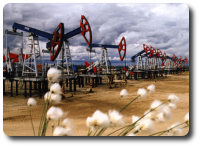
OPEC’s spare capacity number is a deep sea monster, like something dark and shimmering in BP’s gushing seafloor well. It could be almost nothing; it might be 2 Mbd at best. The only thing people agree about is that the number is dropping.
What is the Petro-Apocalypse? Is it still alive, waiting to unfurl like Paul the Psychic Octopus, and tell us we will all lose? Or did the Apocalypse disappear like visions of Global Warming and mass CO2 fear and loathing, in 2009? Or has it been magicked away by huge finds of deep water oil, bounding tarsand oil production, and vast quantities of shale gas?
Scenarios of catastrophic rapid declines in oil supplies, economic crisis, geopolitical rivalry and Islamic-flavoured oil war faded somewhat since their heyday around 2005, being replaced by real world record high oil prices (and prices of coal and uranium) by 2008.
Today’s downsized Petro-Apocalypse cottage industry focuses events like BP’s Gulf of Mexico environmental massacre but without high oil prices to keep the consumer herd focused, scenarios for ‘traditional’ crises or ‘traditional’ oil wars are pale things, compared with the latest government austerity plan or latest idiocy on YouTube or Facebook.
Intellectuals, or supposed intellectuals, criticize Peak Oil as a “Malthusian view” of mineral resources – Malthusian doomsters defending the strange idea that non renewable resources necessarily decline as production and consumption rises. Other key arguments ranged against Peak Oil include the claim that human innovation, new technology and corporate initiative will always “unlock new resources”, and do so fastest whenever things look bleak for the human race. For fossil fuels, shale gas is the present shining light.
Tony Hayward of BP, still trying to get his life back, was himself an early cheerleader for shale gas development using hydro fracturing of “tight gas” reserves mostly found in shale formations, relieving and rescuing natural gas consumers forced to pay more for declining conventional gas reserves. BP, as we know, is a world leader in deep water oil exploration and production, and deep water oil resources are another claimed quick fix for beating the decline of conventional resources, an arena for steel nerved corporate risk taking, and a full metal replique to “Malthusian views”.
Certainly in the case of deep water oil, less surely for shale and fracture gas, these “last best” solutions are unlikely to head off high and rising oil prices, or gas prices that will trend upwards from their recent extreme lows, in the USA, and stay at what are called high price levels, outside the USA.
Talking down Peak Oil is always the basic goal. Since 2009, Peak Oil alarm has been heavily but inexpertly talked down from its mid-year 2008 high point, when oil prices on the Nymex briefly attained US$147 a barrel.
Keeping prices below “psychological ceilings” is very important, notably the US$90 a barrel price level identified by US Federal Reserve chairman Ben Bernanke, at the August 2009 Jackson Hole meeting of world central banking chiefs. The rationale is that high oil prices are bad for confidence in the economy, bad for inflation and bad for consumer spending – and the hoped-for economic recovery needs more oil.
Fighting Facts With Dreams
The cheap oil wish list dates back to the very first Oil Shocks, of the 1970s, and is based on what can seem credible, to lower IQ consumers of sloganized economic notions, but runs against simple geological and technological, industrial, economic and financial reality. The cheap oil dream held true for a long time – a long time ago, but today, when global oil demand recovers to anything like the 2004-2007 rate of annual increase, around 2% a year or 1.75 million barrels a day extra demand each year, the world supply ceiling will be quickly crunched.
Prices will then soon rupture the magic 90-dollar glass ceiling. The reason is that world production capacity has not caught up with demand, despite prices multiplied by around 7 in the last 10 years and record level oil exploration spending for more than 5 years. This alone should alert even the coziest minded economist to “something is wrong”, and of course fuel a million conspiracy theories.
To be sure, deep water oil discoveries are trumpeted in the corporate-friendly press and media, but the numbers given for oil finds carefully avoid saying that deep water resource finds, and producible reserves, are two different things. Resource finds like the BP Macondo field (on which Deepwater Horizon was drilling) announced as a resource find of maybe 300 million barrels or more, will probably produce less than 50 million barrels – BP in July 2010 itself estimating 44 to 50 million barrels.
World oil resource findings are still at most, and at best one-third annual consumption, that is 10 billion barrels are found but 31 billion barrels are consumed. Of the 10 billion found each year (and some years in the 2000-2010 period the ‘score’ has been below 5 billion) we do not know what percentage will be extracted and produced, over the next 15, 20 or 30 years, but it will be low.
Almost at any time, the dreaded 100-dollar barrel can soar out from the ruins of the shattered 90-dollar glass ceiling.
World gas prices, increasingly dependent on high capital cost LNG infrastructures, will likely trend up towards current LNG prices, around US$9 – 11 per million BTU, not down to unrealistic current prices for US pipeline supplies at under US$5 per million BTU.
To be sure, these forecasts are rarely heard in the media, whether business, financial or other. Coal and uranium, which are far from Forgotten Fossil Fuels, face their own geological, as well as industrial, economic, financial and environmental, as well as geopolitical limits on constant supply expansion. In the 2007-2008 period both uranium and coal prices attained their most recent record highs, uranium prices growing from their most recent low, of US $8 per pound in 2000 to US $135 a pound in 2007, and coal prices mutliplying by 6 through 2000-2008.
Oil, gas, coal and uranium are needed to power economic recovery in the real world economy. That is needed to power real world airplane flights, and real world cars bought by real world consumers – not oil saving electric vehicles of the high cost and fragile, ecological fantasy future. Saving the airline industry and cranking out more cars have been two of the rare signs of economic recovery in OECD countries, following the subprime belly-up for the finance sector, recourse to massive government borrowing by political leaders, and “injections” of these borrowed funds into the economy – notably to encourage car buying.
This shift of private and corporate debt, to government and sovereign and national debt, has been the only real change in the economy since late 2007 and though 2008-2009. Restoring economic growth, if only to reduce national debt burdens needs confidence. The conventional “herd argument” for cheap oil says that if oil stays cheap, consumers will stay confident. This cozy argument has been many times disproved by simple global macro trends, and specially the petrodollar recycling fillip to growth, described in many IMF and US Federal Reserve working papers, but the story remains a crowd puller and favorite for the simple-minded.
What is real is that cheap oil wastes resources and keeps careless consumers wasteful, and oil greed starts wars, but that is not a consumer-friendly message.
Oil Demand Recovery
The world economy relies on oil, but the Petro Apocalypse theory pretends that high priced oil will blow up or blow out the economy in an inflation fireball. The economic crash of 2007-2009, triggered by scam financial products derived from mortgage debt traded by excited, greedy yuppies for supposedly responsible high street banks – and not by high oil prices – saw some countries, for example Japan and a string of European countries plunging at a rate of 5% to 15% in their GDP output over one year.
World trade contracted at more than 12% a year, in an economic crisis described by the IMF as the worst since 1929, but this economic woe managed only to dent world oil demand by about 3.5%. By midyear 2009, world oil demand contraction had ceased.
From late 2009-early 2010, demand growth returned and oil prices bounced back, as the giant emerging economies of China and India power ahead – using oil – in a totally classic model of industry based economic expansion. This notably includes their car industries, producing cars 98% fueled by oil, with car output growing at 10%, 15% or 20% a year, like the number of airplane passengers their national fleet operators carry.
Both China and India have a capital surplus and manageable national budgets, totally unlike the OECD countries, such as the USA with its federal budget deficit for year 2010 estimated at US$1600 billion. Despite average per capita wealth 10 or 15 less than OECD averages, paying for oil at US$90 a barrel is strictly no problem for China and India. Imagining Chinese and Indian economic growth might be possible without oil is like Tony Hayward imagining he can keep his job.
Finding More Oil
The Petro Apocalypse – for some this summarizes to paying more than US$90 a barrel – can only be pushed back a little further in time, another day gained for the plastics-and-pesticides greed-is-good consumer society, by finding more oil. Finding oil is what pushed and incited BP, and other major oil corporations, from all leading oil importer countries, including China and India, to make a lemming rush into extreme high cost, high risk and high loss deep water oil exploration and development.
The reason is simple: onshore and shallow offshore oil reserves are depleting. The OPEC states and Russia control the largest remaining onshore resources of cheaper-produced oil. They are not particularly interested in producing, and depleting their natural resources in the shortest possible time, to satisfy consumer countries. Between “resource nationalism” and “resource imperialism” the conservation-exploitation divide runs like Africa’s Rift Valley.
Getting more oil out of the ground, anywhere on Earth, is increasingly difficult. For the OPEC states and Russia the likely coming trend is a cap or freeze on exploration spending, dictated by costs more than supposed “economic terror” cravings or a desire to ruing the world economy.
To be sure, press statements and news releases from the Big-5 International Oil Corporations (IOCs) BP, Exxon Mobil, Chevron, Total and Shell vaunt their high-tech cutting edge, their corporate respect for the environment, and their supposedly high efficiency, low waste extraction of the precious oil needed to power the consumer herd. In fact their deep water and tarsand oil production is necessarily high cost, high risk and high waste. A single “dry hole” in an ultra deep water prospect, can cost US$200 million.
Producing synthetic oil from tarsand and oil shales typically needs barrel prices over US $75 to break even – and the break even price level rises with the barrel price, because production is so energy intensive.
Risks are shown by BP’s Macondo field disaster, and by typical “normal loss” rates as high as 1 or 2 percent of nameplate capacity in very deep water: leaving pollution that will take decades – or centuries – to disappear in the ice cold waters 1 or 2 miles straight down from the surface. Only in highly special circumstances, like BP’s disaster, are these loss rates made known to the consumer public, casually swigging the increasingly high cost, high waste and high environment impact oil they think they rely on.
Actual extractable or productible reserves, relative to resources, are usually in the range of 5% to 15%. In the case of BP’s Macondo field, the extractable amount will be around 44 – 50 million barrels, over 15 years or more, for a field probably holding an initial resource of 250 – 300 million barrels. BP’s nearby “supergiant” Tiber field, found in 2009, is claimed by BP to hold as much as 8 billion barrels, but BP estimates that probably under 400 million barrels can be extracted from it, over its operating lifetime.
Going back to the case of the Macondo field, we can note that BP’s current estimate of extractable oil from this field, about 44 – 50 million barrels, through about 15 years of field operations is enough oil to cover about 12 – 14 hours of today’s world demand.
If this is a robust defeat for Malthusian thinking or the “Malthus principle”, applied to oil, we could argue that rising NATO troop levels in Afghanistan are a sure proof that hearts-and-minds are being won. In fact, with oil like the tolerance of Afghans for military occupation, the faster we use it up, the faster it runs out and is gone.
Mother Of Invention
Apologists of deep offshore oil, and its onshore lookalike for destruction of the environment, high costs, high waste and low net energy yield – Canadian tarsand oil extraction – quickly shift their pitch. They describe deep water scraping of the barrel, and ripping tens of thousands of square kilometres of Canadian boreal forest land, as yet more stirring proofs that Necessity is the Mother of Invention.
When the oil based, oil fired society starts seriously running out of oil, today, producers find new ways to predate the environment, because Blind Society only has one need – to keep the party going. One More Day is the sole credo. This generates a never ceasing and solid outpouring of hypocrisy and bleating. One favourite is that High tech oil may only be “transitionally” damaging to the environment.
Well managed news on High tech finally reducing environment impact and ultimately reducing resource waste, has a simple bottom line: keep the consumer public bumbling along in happy ignorance of reality, and keep producing enough non renewable resources to keep the public consuming, powering unstable and fragile, certain-to-fail economic growth.
A 2003 version of this semi-religious morally flexible vision with ET trimmings, was applied to selling the Iraq war as a justifiable struggle to open up a formerly closed OPEC state, to high tech oil prospecting and development.
With the help of august bodies like the American Institute of Petroleum, the propaganda circus went as far as claiming that vast quantities of ultra light, sweet crude oil were located just a few feet deep, under each and every one of Saddam Hussein’s palaces. Remote sensing from spy planes or spy satellites clearly showed the prospect, on fuzzy, grainy black-and-white photos, the same type used to flash images of Iraq’s Weapons of Mass Destruction, threatening both cheap oil and humanity.
Sadly enough, the cheap sweet crude under Saddam palaces was as fake as most BP press statements on actual rates of oil spewing from its sea floor well blow out in the Gulf of Mexico. In a sign of the times – the move to Green Energy – the propaganda machine has moved on. Afghanistan is now claimed to hold vast quantities of lithium, to make electric car batteries. This will save the oil – that thanks to deep water exploration and production can never, ever run out!
Setting The Scene
Resource Cornucopians are a related race to babbling, hypocritical environment crunching and resource imperialist Apologists. Both know that to keep consumer friendly, they must move with the consumer herd’s shifting, unsure set of daily obsessions and instant slogans. Oil shortage was likely a 2008 worry bead; replaced in 2009 by climate change and CO2 emission fears, and then by economic crisis, austerity and debt in 2010.
The return of oil at over US$90 barrel, in 2010, will therefore surely set the scene for vintage media outpourings. Logically speaking, Afghanistan’s extremely rich lithium resources, justifying further excesses in this colonial war, makes it unimportant if oil prices rise. The consumer herd will only have to pay US$90 a barrel during the few years needed for the car industry to make a 100% shift to all-electric car manufacturing. How to charge the batteries of a 950-million world car fleet of electric cars, assuming the present car fleet doesn’t grow, and does shift to all-electric, is another fantasy subject area.
Unfortunately, logic is not a strong point of hippy dreamers, congenital liars and the braindead consumer herd. Oil resource Cornucopians inform us that when we get to the real paydirt for cheap oil, which will be onshore and will unsurprisingly be located in OPEC states and Russia, all prospect of oil shortage will be banished forever. Oil prices will fall to any nice, low number the most wasteful oil consumer would care to name.
Cornucopians normally respond to any question as to why the IOCs are foraging and recklessly grappling oil from ultra deep water, and from Athabasca tarsands, that getting oil from “tight formations” and from “hostile environments” is a great example of Necessity Mothering Invention, a splendid proof of man’s ingenuity. This heroic technology, they go on, will however only be needed in the interval before our IOCs get access the incredible bounty of cheap oil that remains.
This is onshore, in all OPEC states, not only Iraq, and also in Russia, as well as smaller amounts but more easily pillaged, in Africa.
Liberating Russia’s oil by military invasion, to be sure, is presently out of the question: the country has a lot too many nuclear weapons, can defend itself, and would massively react to oil-greed motivated “liberation”. Another problem is that Russia’s remaining oil reserves, like its gas reserves are both over-estimated and depleting. Getting what remains of Russia’s oil reserves needs more devious and diplomatic methods, than outright invasion, for example by long-term sapping of the country’s already super-corrupt economy, society and politics.
Liberating Resources For Civilization
This leaves the OPEC states, and the gaggle of smaller, but collectively interesting new oil producers of Black Africa as better targets for a quick hit, that is Afghan-style and Iraq-style military invasion and “liberation”, or at the least political intimidation and oil-fired Gunboat Diplomacy.
For the Black African oil producers there is one detail: to keep them exporting a high percent of their small production, they have to stay dirt poor and undeveloped, not using too much oil at home, to generate the oil export surplus that feeds the “mature postindustrial democracies”. This helps explain the rush to force Green Energy down African throats, most recently by the IMF’s thwarted attempt at creating a $100 billion facility for green energy in low income countries “by 2020”. Burning sticks or twigs and dancing round a solar collector will be very good for Africans, if it levers a little more oil for the average “postindustrial” environment conscious consumer.
Dependence on OPEC and Russia, in a world supposedly “brimful” with oil, is however depressingly easy to demonstrate. Saudi Arabia and other GCC country members of the OAPEC group, plus non-OPEC Russia, that is a total 7 countries, currently supply around 28 million barrels a day (Mbd). This is about 55% of world total traded and transported oil. This export surplus from 7 countries covers the oil needs of more than 100 countries.
The fantasy claim of cheap oil hopefuls is that OPEC can no longer “manipulate market prices”. These are now manipulated by American private bankers, notably Goldman Sachs and other “big players” on world oil markets. As shown by their antics of 2008, oil trading yuppies can gouge prices every bit as high as Arab despots or Russian mafiosi, in their permanent shadow play and rumor circus, a casino where 80 – 100 paper barrels are traded for every 1 real barrel. It has no relation at all to real world oil production, by OPEC states or anybody else, but it smacks of “free market transparency” whenever it talks down prices.
Supposed “key fundamentals”, feeding the rumor mill, include OPEC’s claimed surplus, or under-utilized oil pumping capacity at any one point in time. This claimed excess capacity has continuously declined from its heyday at around 10 Mbd, in the 1990s, when the oil trader fraternity had only to chant “Structural oversupply – Too much capacity”, and prices would obediently shrink to almost nothing. This story stopped working by at latest 2005.
OPEC’s flagrant non-performance in keeping up spare capacity, is clear.
Back To Oil War
Today’s OPEC spare capacity number is a deep sea monster, like something dark and shimmering in BP’s gushing seafloor Macondo well a mile below the surface. It could be almost nothing; it might be 2 Mbd at best. The only thing people agree about is that the number is dropping.
The media and press in the consumer democracies have few problems identifying why this is the case: OPEC’s hostility and cynicism, its refusal to invest in producing more oil to supply more and keep price low for consumers countries, and the diversion by OPEC states (and probably Russia) of oil revenues from the sacred quest of increasing oil output and depleting their national reserves faster, to aiding terror and hindering the free market.
This gives another cut on how Petro-Apocalypse will burst back, when the right price signal is set by Nymex yuppy traders: OPEC states are run by terror-aiding political despots intent on harming innocent drivers of 4WDs on their way to shop for plastics-and-pesticides in the Universal Supermarket. With only 2 Mbd “behind the valve,” oil supply they can turn on and off at will, we are evidently held to ransom. Pre-emptive oil war is justified and normal.
This we can note is despite what Apologists and Cornucopians throw at the microphone, on the vast oil resources held in deep water offshore provinces of civilized countries, like the USA, gorged with oil in the same way that Russia and the OPEC states are gorged with onshore oil. Unlocking this oil is a sacred task for our high-tech, environment conscious oil corporations like BP, but since this is taking rather a long while, costs too much, and can even cause minor environmental crises, invading OPEC states is a better strategy.
Global Non Investment
How can supply be so short when Cornucopian dreamers gurgle that so much oil is still available in the ground? The answer is under-investment. A favoured estimate of world oil reserves by truth-loving and reliable Tony Hayward of BP is that we have “at least 150 years supply”, about 4500 billion barrels, in reserve. His chief economist could give the cutoff barrel price used to cobble this massive prospect – maybe US$250 a barrel.
The basic problem is therefore simple: it costs a lot of dosh, not slick Powerpoint slide shows at business feel-ins and get-togethers, to extract smaller percentages of oil in place from depleting and smaller-sized reserves in more and more remote geological basins, including the deep ocean floor. Missing out on small, or tiny tiny pockets of high cost, very hot oil locked under salt beds, 5 miles under the sea floor, under 1 mile of water can cost US$200 million a shot. This explains why so few new barrels are found per dollar spent on exploration, and why the cost curve for new finds only goes up.
Through the 1985-1999 period – the Cheap Oil Interval – global oil industry investment was a no-no. There was too much supply capacity, due to Saudi Arabia caning its reserves to keep the USA happy, and Russia caning its reserves to pay off its debt. But all good things – for greedy oil consumers – come to an end. Oil sector investment has climbed the same steep curve as oil prices since around 2004, but to no avail. Every year it costs more to add or replace the same barrel-per-day pumping capacity.
Capital spending needed for each extra barrel-day of capacity, or to prevent or slow the same capacity from being lost, has been rising at typical rates of 20% a year for more than 5 years.
Deep offshore and Canadian tarsand oil are two of the most expensive possible methods of extracting oil. There is no possibility of this production being sustained without what average consumers, and their average political leaders call “high” oil prices.
Cornucopians wax realistic, from time to time, and for instance say it takes huge and costly investment to maintain capacity, and massive exploration, drilling and production budgets to sustain and replace lost and declining production. The Deepwater Horizon rig, blown up by BP in April 2010, killing 11 workers is an example: this supposed jewel of high-tech had a price tag of $365 million. Shallow offshore, and onshore rigs cost a fraction of this.
OPEC states that do not invest huge amounts each year to maintain export supply volumes are therefore natural targets of consumer ire – but the unsurprising fact is that OPEC states and Russia have other things to invest in, such as regular economic development, education, health, housing and transport – exactly like the oil consumer countries. Venezuela is favoured non-Arab target for American oil whining and jealousy, with the Hugo Chavez government accused of mismanaging a stagnant output oil industry, committing the heinous fault of not always increasing output, to prevent prices from rising, and satisfying American oil wasters.
Venezuela’s national oil company, PDVSA, which continues to employ many Americans in strategic posts, faces plenty of challenges – including geological depletion of its cheaper and easier produced reserves, which have been extracted for over 85 years. The claim is that Venezuela “could double its production”, especially if it was invaded, that is “liberated” Iraq-style. For Chavez however, like his ally Evo Morales of Bolivia sitting on a stash of lithium (but now menaced by Afghan warlords), high prices for his oil commodity export – say $100 a barrel – buys plenty of street credibility.
There Will Be Oil
Over and beyond to war-crazed ranting of old style imperialists unable to accept that depletion is a reality, the basic fact is there is no real shortage of oil, if the right price is paid. Also at this time, and simply because world supply/demand balances are so tight, the invasion and occupation “model” or “war option” for improving oil production performance in exporter countries, such as Iraq, would surely backfire if it was used.
Loss of supply from the country being “liberated” by war criminals would impact fragile and “mature” supply structures – quickly driving up oil prices, to the displeasure of average greedy consumers, who also occasionally vote.
The well-mapped tipping point for peak oil starting in 2010-2011 depends only on the intensity of the global economic recovery and the growth rate of world oil demand. By late 2010 we can have prices back over US$100 a barrel, and by early 2011 prices may be very high, due to structural shortage. Despite this, we will have only reached the point where 50 percent of the world’s ultimately recoverable oil has been consumed. The second round is coming, and
The other 50 percent will be more wisely used, simply because prices will rise to high levels – and stay at high levels despite cyclic or other economic recessions, encouraging conservation and substitution. Welcome to the real world, real future!
5 Comments on "Andrew McKillop: Petro-Apocalypse Revisited"
KenZ300 on Mon, 12th Jul 2010 11:33 am
Can we bring on alternatives and biofuels fast enough to diversify our supply of energy and make a transition that does not cause an economic shock?
indigoboy on Mon, 12th Jul 2010 3:21 pm
KenZ300
Please read up on the subject of Peak Oil a little bit more, before asking the kind of question you have just asked.
In particular check out:
EROEI (Energy Returned on Energy Invested.
ELM (Export Land Model)
The Energy values of different sources of energy (ie. BTU values)
No offense meant. Just trying to inform.
Anatoli Ostapenko on Tue, 13th Jul 2010 4:34 pm
Summarizing the article:
Every move the US government (and mass media) makes in terms of politics, ideology, economic, environmental and military policies boils down to keeping the American monetary system afloat through limiting the barrel price of oil.
This, the author concludes, is counterproductive (even contradictory) as development of new oil deposits require higher price to be economically viable. Cutting corners, in order to make exploration and production cheaper, leads to environmental disasters. This closes the circle of contradictions – there isn’t a way out, not through renewables or electric cars – the whole system must change.
Those who run the system don’t want any changes. They would rather opt for economic stagnation or even war to save the USDollar as the world’s currency from the risk of depreciation (annihilation, disintegration, etc.)
Am I getting this right?
Jimmy on Tue, 13th Jul 2010 8:36 pm
Ok, how about this for logic!
Use Industrial hemp to produce methanol, food and materials to drive western economies. We improve the soil, remove co2 and improve our body mind and soul.
Hemp costs next to nothing to implement, the biggest cost is adjusting transport to accept hemp based methanol. We create domestic energy, domestic food and domestic wealth, indefinitely.
Then, lets get a guy like Paul Stamets into a well backed venture capital start up, and produce fuel from mushrooms for export to other nations, then the west becomes the controller once more. Lets end this madness and get smart.
Hemp is not a drug, its a golden asset that we must use to dig ourselves out of this mess. There are no fantasies or flawed arguments here. Hemp is a winner, and we have to align with this plant.
Peace.
Trevor Guillard on Wed, 14th Jul 2010 10:38 pm
@Jimmy on Tue, 13th Jul 2010 8:36 pm
And your supporting data?