
Peak Oil is You
Donate Bitcoins ;-) or Paypal :-)


Page added on June 26, 2010

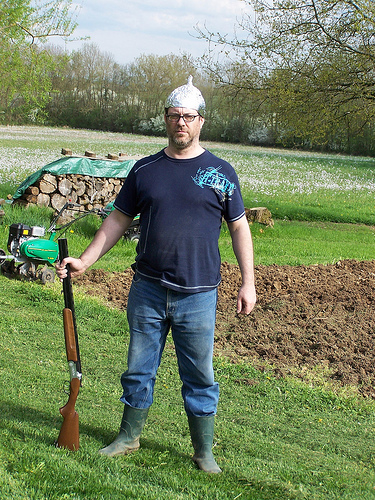
The Climate Change Thought Police
my position has always been that I accept the scientific consensus on climate change, but also understand that science isn’t static. Therefore, it is important not to shut debate down and short-circuit the scientific process. But many climate change advocates have long sought to do just that by trying to intimidate people into not discussing the issue. They like to say “the science is settled and those who disagree are deniers.” I view the labeling of people as “deniers” as such an intimidation tactic. It is a remark intended to disparage those with a different view, and as such I don’t believe it has a place in this debate (no matter how correct you think you are).
They have labeled me a “denier” because they extrapolated my position into something it is not. They chose to put words in my mouth. One falsely claimed that I was suggesting that it would soon start to cool off as CO2 stopped rising. The other falsely claimed that I suggested all greenhouse gases would immediately stop climbing. Note that I neither said nor implied any of the things they attributed to me.
What can you say about someone who would slap a derogatory label on anyone they feel isn’t in compliance with their views on climate change? It invokes images of a “Climate Change Thought Police.”
I do not want to see this issue turned into a religion, where belief trumps all and disbelievers must be harshly dealt with. That’s what these two have done, and they are certainly not isolated in their opinions. But when you go so far as to start slapping derogatory labels on those who don’t even dispute that there is a problem, then you deserve your own labels. You are nothing more than Joe McCarthy looking for phantom Communists everywhere.
One Comment on "The Climate Change Thought Police"
Edpeak on Sun, 27th Jun 2010 12:23 am
“They chose to put words in my mouth”
Maybe it would help if you were more careful in the words you use, and then you’d be less misunderstood? For example you said, “But many climate change advocates..” Um, I think you meant to say, “climate change awareness activists” because very few people actually, you know, “advocate” that they “want” the climate to “change” (read: be destabilized) by human activities. It’s kind of like calling folks concerned to reduce or eliminate a disease like malaria as “malaria advocates” as if they are “advocating” malaria instead of advocating action on malaria. An extra word or two (or different words) would be better, especially since you’re so ‘sensitive’ about words applied to you, ya know? And speaking of not putting words in other people’s mouths, I wasn’t there for your encounter but can say that *most* people who say “the science is settled” are referring to the science is settled on 1) climate “change” (destabilization) is real, is happening 2) is to a large extent due to human activities and sometimes also 3) poses significant risks. They very rarely are claiming the “science is settled” about other things like, “100% complete understanding”or what exactly, exactly, will happen where (sub-regions of Earth), or exactly when. Please don’t put (false) words into the mouths of people by (mis)representing what they actually mean when they refer to the science being settled, ok? Those who deny there is a settled consensus on 1), 2), and 3) are indeed deniers, and that’s a very mild, kind word to use for them, there are much stronger words that would be used to describe the action of claiming something that overwhelming evidence shows is true (1, 2, and 3) and then trying to convince everyone not to take the commonsense protective steps and by not taking the protective steps, large long-term disasters are highly likely. “denier” is a very mild term for someone like that. What would you call someone who advocates in-action where they know, or should know if they are honest, that this inaction will be hugely destructive? You’d not use terms as mild as ‘denier’, or even as mild as ‘dangerous dishonest person’ either. Then again if you’re not denying 1,2,3 above, be more specific and clear. As the above examples show, you too should think about not “putting words into people’s mouths””