
Peak Oil is You

Donate Bitcoins ;-) or Paypal :-)


Page added on June 6, 2010

Goodbye, Limitless Oil. Hello, Primitive Dystopia.
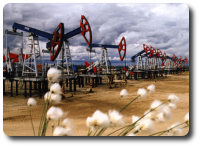
Americans have long been fascinated by disaster scenarios, from the population explosion to the cold war to global warming. These days the doomers, as Mrs. Wilkerson jokingly calls herself and likeminded others, have a new focus: peak oil. They argue that oil supplies peaked as early as 2008 and will decline rapidly, taking the economy with them.
Located somewhere between the environmental movement and the bunkered survivalists, the peak oil crowd is small but growing, reaching from health food stores to Congress, where a Democrat and a Republican formed a Congressional Peak Oil Caucus.
And they have been resourceful, sharing the concerns of other “collapsitarians,” including global debt and climate change — both caused by overuse of diminishing oil supplies, they maintain.
Many people dispute the peak oil hypothesis, including Daniel Yergin, the Pulitzer Prize-winning author of “The Prize: The Epic Quest for Oil, Money and Power” and chairman of IHS Cambridge Energy Research Associates, a company that advises governments and industry. Mr. Yergin has argued that new technology continues to bring more oil.
Andre Angelantoni is not taking that chance. In his home in San Rafael, Calif., he has stocked food reserves in case an oil squeeze prevents food from reaching market and has converted his investments into gold and silver.
The effects of peak oil, including high energy prices, will not be gentle, said Mr. Angelantoni, a Web designer whose company, Post Peak Living, offers the telephone class and a handful of online courses for life after a collapse.
“Our whole economy depends on greater and greater energy supplies, and that just isn’t possible,” he said. “I wish I could say we’ll quietly accept having many millions of people unemployed, their homes foreclosed. But it’s hard to see the whole country transitioning to a low-energy future without people becoming angry. There’s going to be quite a bit of social turmoil on the way down.”
Transition US, a British transplant that seeks to help towns brace for life after oil, including a “population die-off” from shortages of oil, food and medicine, now has 68 official chapters around the country, since starting with just two in 2008. Group projects range from community vegetable gardens to creating local currency in case the national one crashes.
Bleak books like James Howard Kunstler’s “The Long Emergency: Surviving the End of Oil, Climate Change, and Other Converging Catastrophes of the Twenty-First Century” and Richard Heinberg’s “The Party’s Over: Oil, War and the Fate of Industrial Societies” have sold 100,000 and 50,000 copies, respectively, according to their publishers.
In Congress in 2005, Representative Roscoe G. Bartlett, Republican of Maryland, and Senator Tom Udall, a New Mexico Democrat who was a representative at the time, created the Congressional Peak Oil Caucus. Web sites, online videos and numerous social networks connect adherents in ways that would once have been impossible.
Mr. Angelantoni, 40, came to his concern about peak oil from an interest in climate change, because he felt its impact would be more precipitous. “The peak oil conversation is where the climate change conversation was 20 years ago,” he said. He distinguished the peak oil crowd from the environmental movement. “The Sierra Club tells people that if we use less energy, the underlying model is sound,” he said. “I don’t think that’s the case.”
Like several people in the telephone class, he said his concern with peak oil had strained his relationship with his spouse, creating an “unbridgeable” distance between them.
“It’s very difficult for people to hear that this form of the economy is breaking down,” he said. “They think that because it hasn’t happened yet that it won’t ever happen.”
4 Comments on "Goodbye, Limitless Oil. Hello, Primitive Dystopia."
Janet Hough on Sun, 6th Jun 2010 6:16 am
I know you are thinking it isn’t what is going to happen.
Stu on Sun, 6th Jun 2010 10:31 am
It’s useless to assume that if we use less resources as in….more efficiency etc that we can sustain our civilisation. Ok, lets say I put up a heap of solar panels on my house, and a wind turbine, and a heap of energy effiecient appliances and I save a heap on energy costs…..I’m the earth a favour right….consuming less resources….wrong. What I save, someone else will simply use. The energy saved by one person cutting back, or 10 million people cutting back will simply be used to fuel more growth…..more population, more per capita consumption in those that don’t cut back. Voluntary efficiency measures will always have this affect. The only way for effiency measures to work is if they are mandated by law, and rations imposed and for there to be no way any person regardless of how rich, can consume more then the rationed amount. These rationed amounts need to steadily decline along with non renewable resources. So that means people have to find more efficient ways of doing the same thing with less energy, or do away with energy consuming activities altogether. For instance, say each house to only use 3 kilowatts per day of electricity then the meter shuts off. If you use your flat screen humoungeous TV, and your air con, then your power is going to go out long before bedtime…..so you dont’ turn the tv on, or watch a portable, or get a more efficient tv. As energy availability declines, tougher rations are introduced, until your energy efficient tv and your ceiling fan with replaced your giant flat screen and air con have to be used carfully. Down we step down the declining stairs of energy depletion……and so does our use. As long as we can maintain our refridgeration and lights…..everything else we cna live without. We can go back to reading, story telling, board games, card games, converstion, instead of tv, video games, etc etc. But if we have market driven forces controlling how much we use via the pricing, there will be a majority of people who dont have fridges and lights, so that those with more money can keep their flat screens and air cons. Unfortunately there will not be enough of those people left with air conditioning and flat screens to maintain a viable market for tv producers or repairers, or air conditioning manufacturers, repairers etc etc. So as their air cons and giant flat screen break down, they wont be able to replace them or repair them. But all those people that had to do away with even lights and fridges means that only a minority of people continued having any electrical appliances at all, so all the electrical appliance manufacturers went broke, there was just no money in making things that nobody could afford to run anymore…..so the rich, in their effort to maintain their life of creature comforts and luxuries, in affect caused the collapse of the systems that made them rich….and after few years of living on the corpse of the old world…..eventually end up with no tvs, air cons, fridges, or anything else…..but with the added disadvantage of having not adjusted to the new norms…..also they are hated and despised by all that they left behind…..bottom line…..they will die.
KenZ300 on Sun, 6th Jun 2010 8:41 pm
Alternative, sustainable energy is the future. Life styles will change. Energy conservation will be more common due to the high price of oil.
The question is will we adapt fast enough and become energy efficient or will society have a dramatic adjustment that it was unprepared for and causes an economic disaster?
Our auto manufacturers and energy companies need to start the transition in ernest. We need distributed power and local energy production. The smart grid needs to become a reality.
Maybe BP’s slogan beyond petroleum needs to go beyond words and into action.
Spill baby spill may accelerate the transition as people realize the cost of oil.
askmaxim on Sun, 6th Jun 2010 9:00 pm
But if we are to ration energy – say, dictate Russia how much to consume and how much to export, and at what price (N.B – I am Russian) – then I demand that you also ration “sun” and let Russians freely move to non-freezing climates (I moved just last year). Saying this “just in case” as there are some ideas in the air that Russians are sitting on the world’s assets and that’s unfair, but almost no country grants visa-free entry to ice-gripped Russians.